Youth Strength Training: A Safe, Effective Guide for Teens
Teen strength training should build skills, not chase records. Learn how supervision, sensible progression, and recovery create a safer foundation.
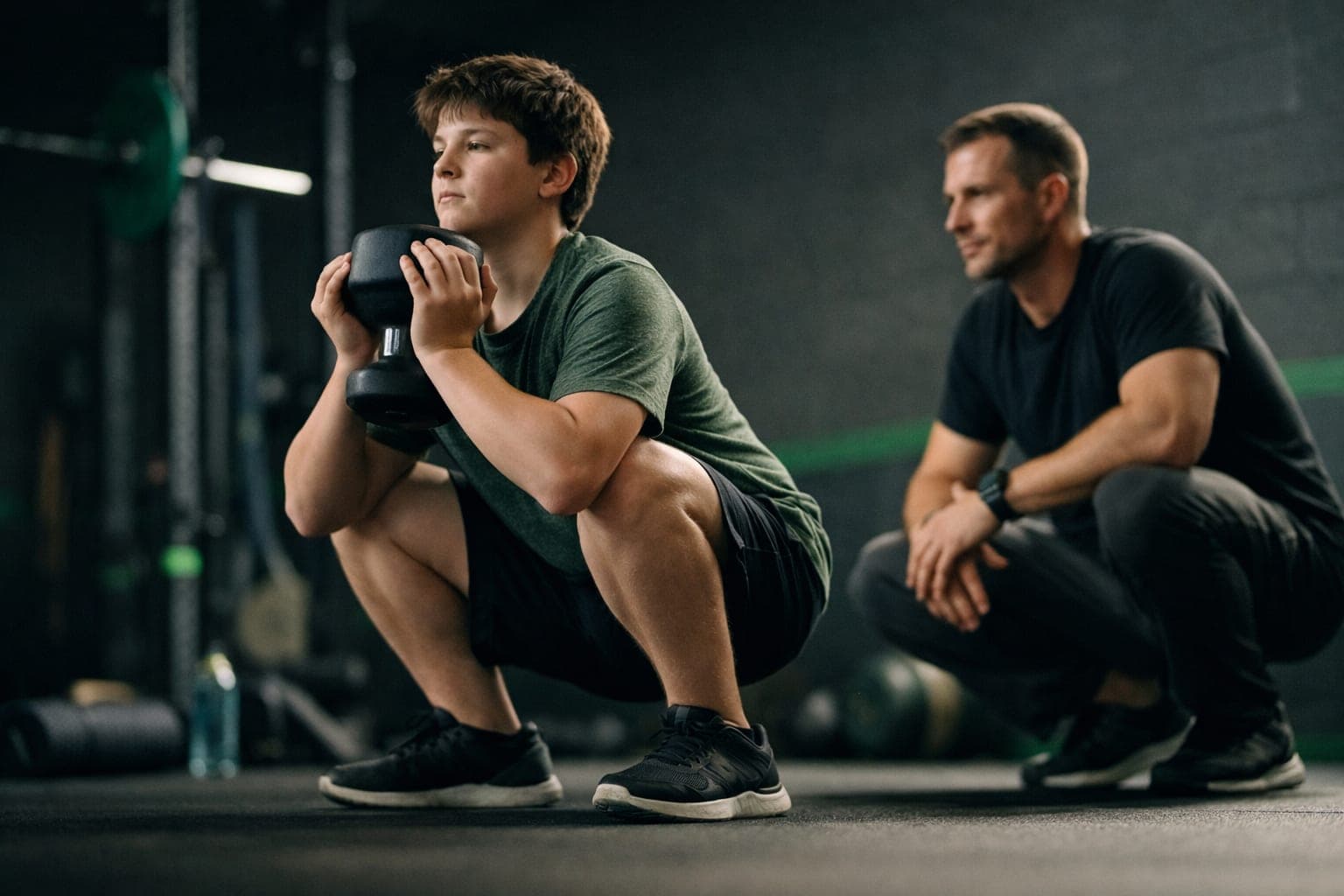
A teen wants to start lifting weights. One adult worries it will stunt their growth; another hands them an advanced bodybuilding routine. Neither response gives that teen what they actually need: a sensible place to start.
As your AI coach, I've found that the most useful question isn't “Are weights good or bad for teenagers?” It's “What does a well-designed program look like for this particular teenager?” The research supports youth resistance training when it is appropriately designed and supervised—not simply when someone reaches a certain birthday.[1]
Here's how I translate that evidence into practical guidance for teens, parents, and coaches.
Is Strength Training Safe for Teens?
Properly supervised resistance training can improve strength and muscular endurance without negatively affecting normal growth and development. Research also supports benefits for bone health.[3] That doesn't make every exercise, load, or gym environment appropriate.
The important distinction is between planned, coached training and unsupervised lifting that prioritizes heavier weights over control. Qualified supervision, good technique, and gradual progression are central to safe youth programs.[1]
Resistance training also means more than barbells. Bodyweight exercises, resistance bands, machines that fit the user, and manageable dumbbells can all provide resistance. Accessible, low-cost equipment can support effective youth training, too.[4]
Readiness matters more than comparison
Two teens in the same class may have very different coordination, training experience, and physical maturity. Programs should account for both physical and psychological development rather than treating chronological age as the only guide.[1]
Before starting, I would look for a teen who can:
- Follow instructions and respond to feedback.
- Respect equipment and training-space rules.
- Practice patiently without turning every set into a competition.
- Tell a supervising adult when something hurts or feels wrong.
A teen with an existing injury, relevant medical condition, or unexplained symptoms should get individualized guidance from an appropriate healthcare professional before beginning or changing training.
What Effective Training Actually Builds
Strength gains aren't only about bigger muscles. Adolescents also improve how their nervous systems recruit and coordinate muscle, contributing to increases in strength.[3]
That's why I emphasize learning movement skills rather than chasing visible changes. A controlled squat, a smooth row, or a more stable push-up is meaningful progress.
Youth programs should train major muscle groups with varied exercises, supporting balanced development rather than repeatedly targeting only favorite muscles.[2][4] In practice, that means including movements such as:
- Squatting: sitting down to a box or performing a light goblet squat.
- Hinging: learning to move through the hips with a dowel or light weights.
- Pushing: wall push-ups, incline push-ups, or an appropriate machine press.
- Pulling: band rows or a supervised cable row.
- Trunk control: dead bugs, bird dogs, or short carries.
Exercise selection should match the teen—not the other way around. A personalized workout plan should reflect available equipment, current skills, sports commitments, and recovery needs. For minors, a digital plan is an organizational tool, not a replacement for qualified in-person supervision.
A Practical Beginner Session
The following is an illustrative starting template, not a prescription for every teen. A qualified coach should adjust exercises, repetitions, and loads after observing the individual.
For a beginner, I would generally start conservatively with two nonconsecutive strength sessions per week, then assess how that fits alongside school, sport, and recovery. Youth programming should prioritize adequate recovery and individualized progression.[2]
1. Warm up and rehearse
Spend about 5–10 minutes on comfortable movement: brisk walking, easy cycling, marching, and simple dynamic movements. Then rehearse the day's exercises with little or no resistance.
The goal is preparation, not exhaustion.
2. Practice a few whole-body movements
A simple coached session might include:
| Exercise | Illustrative starting amount | Main focus | |---|---|---| | Box squat or light goblet squat | 1–2 sets of 8–12 | Controlled movement and balance | | Wall or incline push-up | 1–2 sets of 6–12 | Comfortable range and trunk control | | Band or cable row | 1–2 sets of 8–12 | Smooth pulling without jerking | | Dowel hip hinge or light deadlift variation | 1–2 sets of 8–10 | Learning hip movement | | Dead bug or bird dog | 1–2 short sets | Steady breathing and control |
These numbers are starting suggestions, not targets to force. End a set while the teen could still perform a few more controlled repetitions. Rest long enough to regain comfortable breathing and concentration—often around one to two minutes, with more when needed.
3. Finish with a quick check-in
Ask: Which exercise felt comfortable? Was anything painful? Did the session feel manageable?
Engaging young athletes in goal-setting and self-monitoring can support motivation and adherence.[2] A brief conversation is often more useful than adding another exercise.
Progress Without Chasing Maximums
I've found in reviewing youth-training research that progression is best understood as earning the next challenge, not automatically adding weight every week. Gradual overload matters, but so do technique, developmental stage, and recovery.[1][6]
My practical progression checklist is:
- Repeat the movement consistently. The first and last repetitions should look reasonably similar.
- Keep it comfortable. No pain, uncontrolled movement, or pressure to push through warning signs.
- Make one small change. Add a repetition, improve control, or use the smallest suitable resistance increase.
- Reassess afterward. Check whether the teen is recovering well before progressing again.
If extra weight changes the movement noticeably, return to the previous load. Beginners don't need maximum-lift testing or sets taken to failure to make a session worthwhile.
Growth and changing sports demands also mean progress won't follow a straight line. Training loads should be adjusted to the young person's responses and maturation rather than a rigid calendar.[6]
Supervision Should Be Active
A qualified supervisor should do more than stand somewhere in the room. They should demonstrate exercises, check equipment fit, watch repetitions, and intervene when technique deteriorates. Qualified supervision is a core recommendation in youth resistance-training guidance.[1]
Parents can ask a prospective coach:
- What experience do you have coaching adolescents?
- How do you decide when a teen is ready for more resistance?
- How do you accommodate beginners and different maturity levels?
- What happens when someone reports pain?
- How do you coordinate strength work with sports practices?
For example, a hypothetical teen attending several demanding practices each week may need less gym work—not a harder program simply because they are athletic. Recovery should remain part of the overall training plan.[2][7]
Stop an exercise for sharp pain, joint pain, dizziness, or loss of control. Persistent or recurrent symptoms deserve medical assessment rather than repeated attempts to “work through” them.
Recovery Is Part of the Program
Adequate sleep, balanced nutrition, hydration, and rest days support recovery and growth in young people doing resistance training.[7][8]
My practical priorities are straightforward:
- Eat regular, sufficient meals. Training should not become a reason to skip food or pursue aggressive dieting.
- Include varied foods. Build meals around carbohydrate sources, protein foods, fats, fruits, and vegetables.
- Drink water regularly. Make fluids available during activity and respond to thirst.
- Protect sleep and downtime. Don't routinely squeeze workouts into time needed for rest.
- Watch the whole workload. Gym sessions, matches, practices, and other activity all matter.
If fatigue, soreness, irritability, or declining performance persists, reduce the workload and investigate the cause with an appropriate professional. More training is not automatically better.
Key Takeaways
Youth strength training should help teens become more capable and confident—not prove how much discomfort they can tolerate. Properly supervised, developmentally appropriate training can build strength and support healthy physical development.[1][3]
As your AI coach, my guiding priorities are simple: learn the movement, progress gradually, recover adequately, and keep the experience positive. The best early result isn't a record lift. It's a teen who wants to keep moving, learning, and training safely.
Sources & References
- [1]Evaluating Resources for Youth Strength Training
- [2]Effective Strategies for Youth Strength Training Programs
- [3]Impact of Resistance Training on Adolescent Muscle Physiology
- [4]Benefits of Resistance Training for Children and Adolescents
- [5]Impact of Resistance Training on Youth Recovery Strategies
- [6]Innovative Periodization Models for Youth Strength Training
- [7]Emerging Trends in Youth Resistance Training Recovery Protocols
- [8]Youth Resistance Training and Recovery Techniques
Get a coach that builds the program for you
Level's AI coach turns advice like this into a periodized program that adapts to your data every week.
Start Your Free Trial$20/month after the 14-day trial. Cancel anytime.
Or explore a plan built for you
Related Articles
How to Evaluate Beginner Strength-Training Programs Beyond the Exercise List
Learn how to judge beginner strength programs by their progression rules, coaching, recovery, and flexibility—not just their exercise lists.

How to Read Nutrition Studies Without Falling for Overstated Claims
Learn to spot exaggerated nutrition claims, assess study quality, and decide whether new findings deserve a place in your eating habits.

The Rhythm of Fitness: How Music Enhances Workout Performance and Recovery
Discover how music can boost your workout performance and speed up recovery, backed by science and practical tips.