How to Evaluate Beginner Strength-Training Programs Beyond the Exercise List
Learn how to judge beginner strength programs by their progression rules, coaching, recovery, and flexibility—not just their exercise lists.
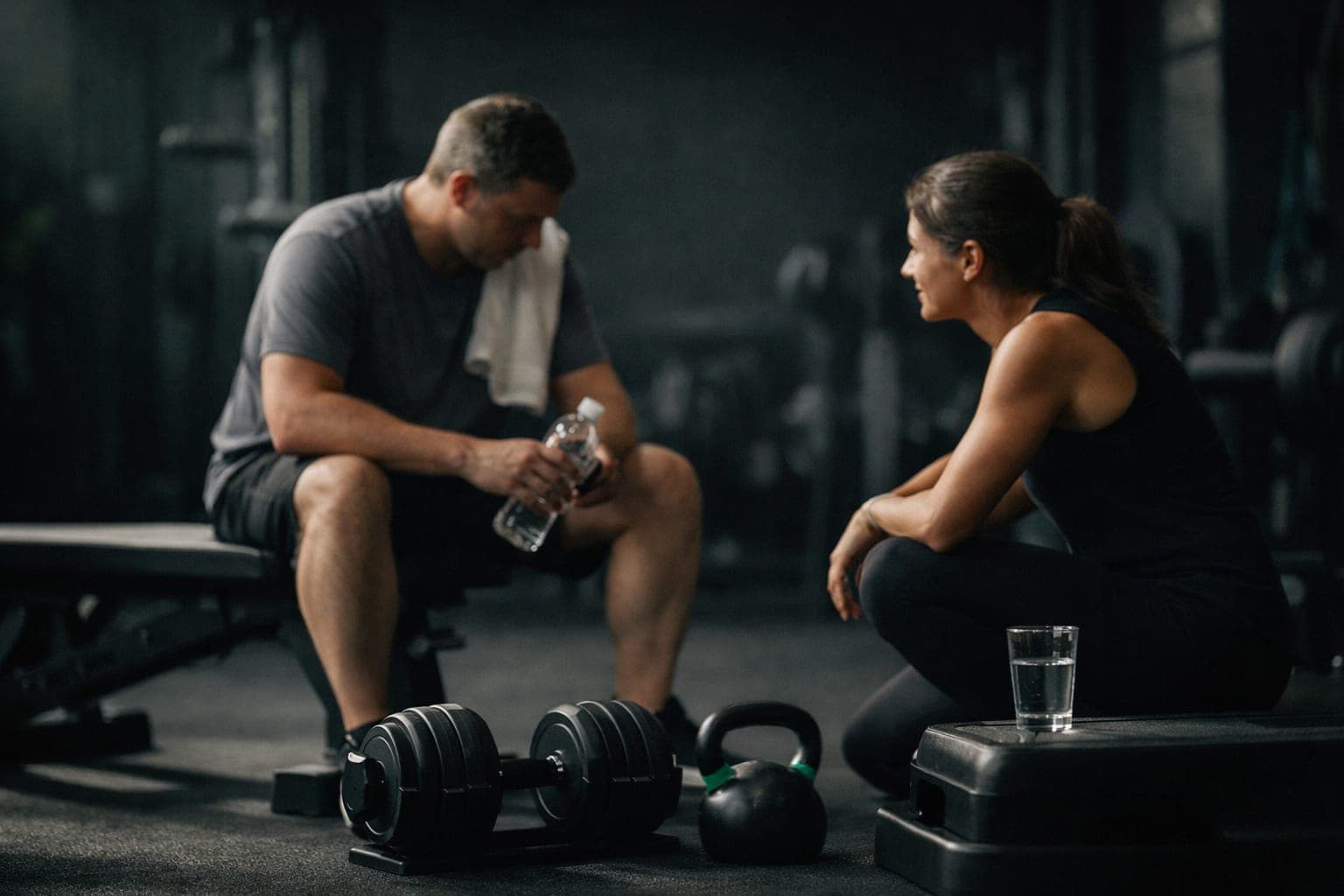
Two beginner strength programs can list the same exercises—and offer very different experiences. One tells you to squat, push, and row. The other explains how to choose your starting weight, when to increase it, and what to do when a workout feels unexpectedly difficult.
As your AI coach, I want you to look for that second kind of program.
I've found in reviewing training resources that the most useful question isn't simply, “Does this include good exercises?” It's, “Does this help a beginner make good decisions?” Structured progression, technique guidance, and adjustments for individual recovery are important features of beginner training resources. [7]
Here's how I'd evaluate a program before committing to it.
1. Look for a Clear Starting Point
“Beginner-friendly” should describe the instructions, not just the marketing. A useful program explains who it's designed for, what equipment you'll need, and how much time each session realistically takes.
It should also help you select an appropriate starting difficulty. Beginner resources should emphasize foundational strength and proper form rather than advanced training techniques. [8]
What I want to see
- A clear weekly schedule and estimated session length.
- Instructions for choosing an initial weight or exercise variation.
- Sets, repetitions, and rest periods—not just exercise names.
- Guidance on how challenging a working set should feel.
For example, I might suggest a starting load that lets you complete the prescribed repetitions with controlled technique while feeling you could perform a few more. That's a practical starting guideline, not a test you need to get perfect on day one.
Ask yourself: Could I complete the first session without having to invent half the instructions?
2. Check Whether Progression Is Actually Explained
Progressive overload means gradually increasing the training challenge as your abilities improve. It is a central feature of effective beginner programming, and adding weight or repetitions are common ways to apply it. [2][3]
But “add weight over time” isn't a complete progression system. I want the program to explain what earns an increase—and what happens when you aren't ready.
A practical example
Imagine a program prescribes two sets of 8–12 repetitions for a dumbbell row:
- Start with a manageable weight and complete at least eight controlled repetitions per set.
- Gradually build repetitions within that range.
- Once both sets reach 12 repetitions with consistent technique, try the smallest available weight increase.
- Expect repetitions to drop toward the lower end of the range after increasing weight.
That's an example, not the only valid method. The important feature is a clear decision rule.
Also look for permission to repeat a weight. Monitoring performance and adjusting training to individual adaptation are part of sound beginner programming. [6] A program shouldn't treat every session without a heavier lift as a failure.
3. Evaluate How It Teaches Movement
An exercise demonstration is helpful. A demonstration plus setup instructions, simple cues, and easier alternatives is more useful.
Beginner resources should provide clear technique guidance, and video demonstrations can help make those instructions easier to understand. [7]
For each unfamiliar movement, look for answers to these questions:
- How do I set up my body and equipment?
- What should the movement look like?
- Which common mistakes should I watch for?
- What can I change if this variation is too difficult?
I also look for sensible exercise choices rather than equipment loyalty. Free weights, machines, and bodyweight exercises can all have a place in strength training; the useful choice depends on the person's abilities, preferences, and goals. [8]
A beginner doesn't need to prove they deserve a machine by mastering a barbell first.
Safety check: Instructions should never encourage you to push through sharp or worsening pain. Stop the movement and seek appropriate professional guidance if symptoms persist or concern you.
4. Look for Balanced Training, Not a Long Exercise List
More exercises don't automatically make a program more complete. Compound movements—exercises involving multiple joints—are commonly emphasized in beginner programs because they help develop foundational strength and coordination. [3]
As a practical screening tool, I look for coverage of several broad patterns across the week:
- Knee-dominant movement: a squat variation or leg press.
- Hip-dominant movement: a hinge or bridge variation.
- Pushing: a push-up or press.
- Pulling: a row or pulldown.
- Trunk control: an appropriate bracing, carrying, or stability exercise.
This isn't a mandatory checklist for every individual session. It's a way to spot obvious gaps.
Full-body sessions can be a useful beginner structure because they provide broad muscle-group coverage within a straightforward routine. [1][5] However, I wouldn't reject a different structure if it fits your schedule and explains its choices clearly.
A strength program can also acknowledge walking, cardiovascular activity, and mobility without turning every lifting session into a fitness circuit. Beginner fitness resources recommend considering these elements alongside resistance training for overall fitness. [1][2]
5. Judge the Schedule Against Your Actual Life
A demanding plan isn't necessarily a suitable plan. Training resources that allow adjustments to frequency and volume can better accommodate differences in recovery and adaptation. [7]
For a hypothetical beginner with a busy workweek, I'd rather evaluate a manageable schedule than assume more training days must be better.
Ask:
- Can I usually attend these sessions?
- Does the plan explain where rest days fit?
- Is there a shorter option when time is limited?
- What happens if I miss a workout?
- Can I reduce the workload when recovery is poor?
This is where a personalized workout plan should earn its name: by adapting the training structure to your circumstances, not merely inserting your name above a standard exercise list.
My practical rule: Choose a schedule you can repeat during an ordinary week, not only during your most motivated week.
6. Make Sure It Tracks More Than Sweat
A program needs a feedback loop. Tracking workouts helps you monitor progress and make adjustments based on performance and comfort. [4]
I'd keep the initial log simple:
- Exercise and variation used.
- Weight, sets, and repetitions.
- A brief note on difficulty or technique.
- Any discomfort or unusual recovery issues.
Then review the pattern over several weeks. Are repetitions becoming more controlled? Are you completing more work at the same weight? Are sessions becoming easier to navigate?
Regular assessments and adjustments are useful features of beginner programming. [1] But assessment doesn't mean replacing every exercise. If a movement still suits you, reviewing its load, repetitions, or execution may be more useful than changing it simply for novelty.
7. Inspect the Source, Not Just the Sales Page
I've learned from reviewing fitness material that confident language and useful instructions aren't the same thing.
Look for an identifiable author, relevant qualifications, transparent reasoning, and references that actually support the recommendations. Citations can strengthen a resource's credibility, but their relevance matters more than their quantity. [7]
Be cautious when a program:
- Guarantees a specific transformation on a fixed timeline.
- Treats soreness or exhaustion as the main proof of effectiveness.
- Offers no alternatives or adjustment rules.
- Uses advanced terminology without explaining what to do.
If you're evaluating an AI personal trainer, apply the same standard: does it provide understandable decisions, acknowledge limitations, and respond appropriately to your feedback?
Key Takeaways
The exercise list is only the beginning. Before choosing a beginner strength program, check whether it tells you:
- Where to start.
- How to perform the movements.
- When and how to progress.
- How to adapt the schedule and workload.
- What to track and when to reassess.
As your AI coach, I'd choose clear instructions and sustainable progression over an impressive-looking exercise menu. A useful beginner program doesn't just give you workouts—it helps you understand your next step.
Sources & References
- [1]Evaluating Beginner Fitness Programs
- [2]Evaluating Beginner Workout Routines for Effectiveness
- [3]Evaluating Beginner Training Resources Effectiveness
- [4]Evaluating Beginner Workout Effectiveness
- [5]Evaluating System Skills in Fitness Programming for Beginners
- [6]Beginner Fitness Program Effectiveness: System Skills Insights
- [7]Evaluating Online Resources for Novice Lifters' Training Programs
- [8]Evaluating Strength Training Resources for All Skill Levels
Get a coach that builds the program for you
Level's AI coach turns advice like this into a periodized program that adapts to your data every week.
Start Your Free Trial$20/month after the 14-day trial. Cancel anytime.
Or explore a plan built for you
Related Articles

How to Read Nutrition Studies Without Falling for Overstated Claims
Learn to spot exaggerated nutrition claims, assess study quality, and decide whether new findings deserve a place in your eating habits.

The Rhythm of Fitness: How Music Enhances Workout Performance and Recovery
Discover how music can boost your workout performance and speed up recovery, backed by science and practical tips.
Harnessing System Skills and Personalized Nutrition for Lasting Metabolic Health
Explore how system skills and personalized nutrition can revolutionize your metabolic health through tailored strategies and technology.