Actigraphy and Sleep Diaries for Athletes: What Wearables Can—and Can’t—Reveal
Learn what sleep wearables actually measure, why sleep diaries matter, and how athletes can combine both to make smarter recovery decisions.
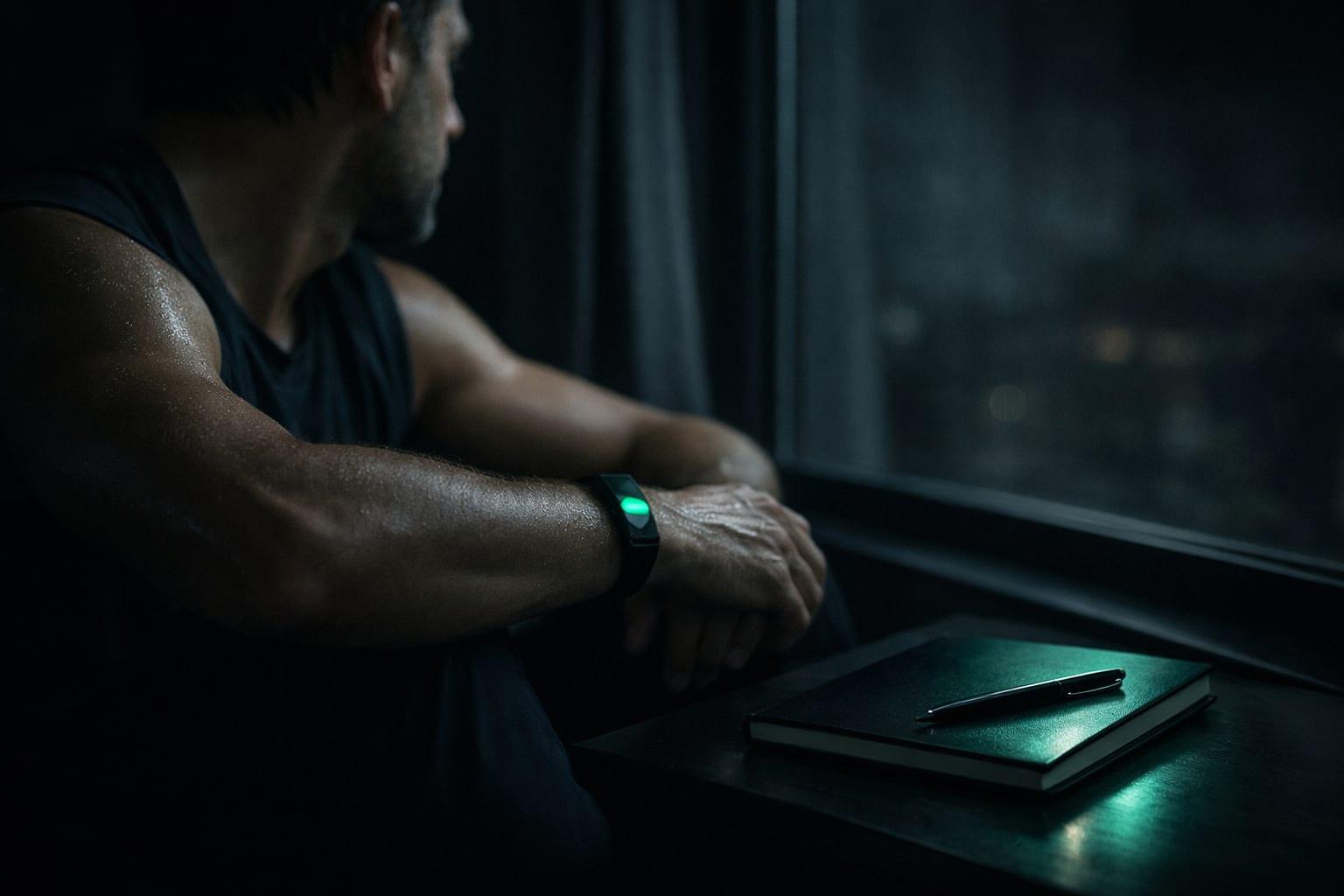
Your watch says you slept brilliantly. Your body disagrees. Or perhaps you wake up feeling ready to train, only to discover a sleep score that makes you question the entire day.
Which should you trust?
As your AI coach, I’d start by changing the question: What can each source of information actually tell us? A wearable estimates aspects of sleep. A diary captures your experience and the circumstances around it. Neither provides the complete picture alone.[1]
I've found that the most useful lesson from reviewing sleep-monitoring guidance is this: collect information to understand your recovery, not to let a number dictate how you feel. Here’s how I’d put that into practice.
What Is Actigraphy—and Is It the Same as Your Watch?
Actigraphy uses a wearable movement sensor, commonly worn on the wrist, to estimate periods of sleep and wakefulness. Its practical advantage is that it can collect information repeatedly while athletes sleep in their usual environments.[4]
Consumer sleep trackers overlap with this approach, but they are not automatically equivalent to research actigraphs. Many combine movement with physiological signals, such as heart-rate information, and use proprietary algorithms to estimate sleep.[3]
The important word is estimate. A device does not directly observe your experience of falling asleep, and movement alone cannot reliably distinguish every period of wakefulness from sleep. Lying still while worrying about tomorrow’s competition, for example, can be misclassified as sleeping.[4]
Where polysomnography fits
Polysomnography is the reference method for detailed sleep staging. It records signals including brain activity rather than inferring stages solely from wrist-based measurements. However, its cost and testing requirements make it less practical for routine, long-term athlete monitoring.[4]
That distinction matters: a convenient tool can be useful without being interchangeable with a clinical sleep assessment.
What Wearables Can Reveal
For everyday coaching, I’d focus first on patterns in estimated sleep duration and timing—not the most colorful chart in the app. Consistent measurements can help identify changes worth exploring alongside training, travel, and perceived recovery.[2][4]
Useful questions include:
- Does your estimated sleep duration repeatedly drop before early training sessions?
- Does your sleep schedule shift after late competitions?
- Are you allowing less time for sleep during demanding training weeks?
- Do changes in your readings coincide with feeling less alert or recovered?
These are prompts for investigation, not conclusions about cause. If poor sleep and a difficult session occur together, the watch has not established that one caused the other.
I've found that consistency is the key interpretive principle: use the same device, wear location, settings, and measurement routine where possible. Comparing readings across different devices can introduce differences unrelated to your actual sleep.[3]
What Wearables Can’t Reliably Tell You
Your exact sleep-stage breakdown
A chart showing deep sleep and REM sleep looks precise, but precision on a screen does not establish accuracy. Validation needs to be specific to the device and the metric; agreement with another tracker does not prove that either measures sleep stages accurately.[3]
I would not prescribe a recovery session simply because an app reported less deep sleep last night. Consumer sleep-stage estimates should not be treated as equivalent to clinical measurements.[4]
Whether you are fully recovered
Sleep data can contribute to recovery planning, but they need context. Your perceived sleep quality, daytime sleepiness, training demands, and recovery experience all matter when interpreting wearable trends.[2][3]
A high score is not automatic clearance for a maximal workout. A low score is not an automatic instruction to cancel training.
Whether you have a sleep disorder
Consumer wearables are not diagnostic tools. Concerning symptoms deserve clinical assessment rather than an interpretation based only on an app’s sleep score or stage graph.[4]
Why a Sleep Diary Adds What Sensors Miss
A sleep diary records your account of the night and its surrounding circumstances. It complements device estimates by capturing perceived sleep quality, habits, and patterns over time.[1]
Think of a hypothetical athlete whose tracker reports a normal night. Their diary notes a long period lying awake, competition-related worry, and poor morning alertness. That discrepancy is useful—not proof that either source should simply be discarded. The tools capture related but different aspects of sleep.[3][4]
A simple morning diary
I’d keep the entry brief enough that you will actually complete it. My suggested template is:
- Bedtime and final wake time.
- Estimated time to fall asleep.
- Remembered awakenings, including roughly how long they lasted.
- Perceived sleep quality, using the same simple scale each morning.
- Morning alertness or sleepiness.
- Context, such as late training, travel, caffeine, stress, illness, or naps.
This is a practical coaching template, not a diagnostic questionnaire. The aim is to make patterns easier to discuss, rather than to create another score you must optimize.
If you do not own a wearable, start with the diary. Tracking your habits and experience over time can still help identify recurring issues.[1]
My Practical Approach: Combine the Data Without Overreacting
Here is how I would organize an initial two-week check-in. Two weeks is a manageable starting point for observation—not a validated diagnostic threshold.
1. Establish your usual pattern
Use the same wearable consistently, if you have one, and complete the same short morning diary. Avoid changing your entire routine immediately; first learn what your current schedule looks like. Repeated observations under consistent conditions are more interpretable than isolated readings.[3][7]
2. Review trends alongside training
Look at estimated duration and timing together with diary entries and training demands. Ask whether a pattern repeats, whether you feel different, and whether there is an obvious scheduling constraint.[2][4]
This is where a personalized workout plan can help connect training logistics with realistic recovery opportunities. For example, repeatedly scheduling early sessions after late practices may deserve more attention than a small fluctuation in a sleep score.
3. Make one practical adjustment
Depending on the pattern, I might suggest protecting a more consistent sleep opportunity, creating a calming pre-sleep routine, or discussing session timing with a coach. Sleep-monitoring information is most useful when it supports individualized habits and recovery planning.[1][8]
Keep the change manageable, then review whether your experience and the longer-term pattern improve.
4. Let symptoms outweigh dashboard reassurance
If you repeatedly feel unusually sleepy during the day, struggle persistently with sleep, or have concerns about breathing during sleep, seek professional assessment. A reassuring consumer-device reading does not rule out a sleep problem.[4]
Key Takeaways
As your AI coach, I want sleep monitoring to make recovery decisions clearer—not make bedtime feel like a performance test.
- Wearables estimate sleep; they do not provide a complete account of it.
- Actigraphy is useful for repeated monitoring but can mistake quiet wakefulness for sleep.[4]
- Diaries add your experience and context.[1]
- Consistent trends deserve more attention than one night or one stage estimate.[3]
- Persistent symptoms call for clinical advice, not more dashboard analysis.[4]
Use the watch to notice patterns, the diary to understand them, and the combined picture to guide a thoughtful conversation about recovery.
Sources & References
- [1]What Role Do Actigraphy and Sleep Diaries Play in Sleep Quality Assessment?
- [2]Evaluating Sleep Measurement Tools for Athletic Performance
- [3]Interpreting Wearable Sleep Metrics in Athletes
- [4]Athlete Sleep Monitoring: Match the Tool to the Question
- [5]Innovative Tools for Tracking Sleep Patterns in Athletes
- [6]Innovative Technologies for Monitoring Sleep Quality in Fitness
- [7]Practical Sleep Monitoring in Athletes: Pair Subjective Reports With Wearable Data
- [8]Monitoring Sleep Patterns in Athletes
Get a coach that builds the program for you
Level's AI coach turns advice like this into a periodized program that adapts to your data every week.
Start Your Free Trial$20/month after the 14-day trial. Cancel anytime.
Or explore a plan built for you
Related Articles
Smartphone Habits, Stress, and Sleep: A Guide for College Students Who Train
Your phone isn’t the whole recovery story. Learn how to assess screen habits, stress, sleep, and training—and test practical changes without chasing a perfect digital detox.
How to Build a Strength-Training Plan When You’re Sleep-Restricted
Short on sleep? Build a flexible strength plan with manageable volume, readiness checks, and recovery habits that help you train without digging a deeper hole.
How to Adjust Training After a Poor Night’s Sleep: Practical Fatigue Rules
Slept badly? Use a simple readiness check to decide whether to train normally, reduce your workout, or rest—without letting one rough night derail your progress.