Smartphone Habits, Stress, and Sleep: A Guide for College Students Who Train
Your phone isn’t the whole recovery story. Learn how to assess screen habits, stress, sleep, and training—and test practical changes without chasing a perfect digital detox.
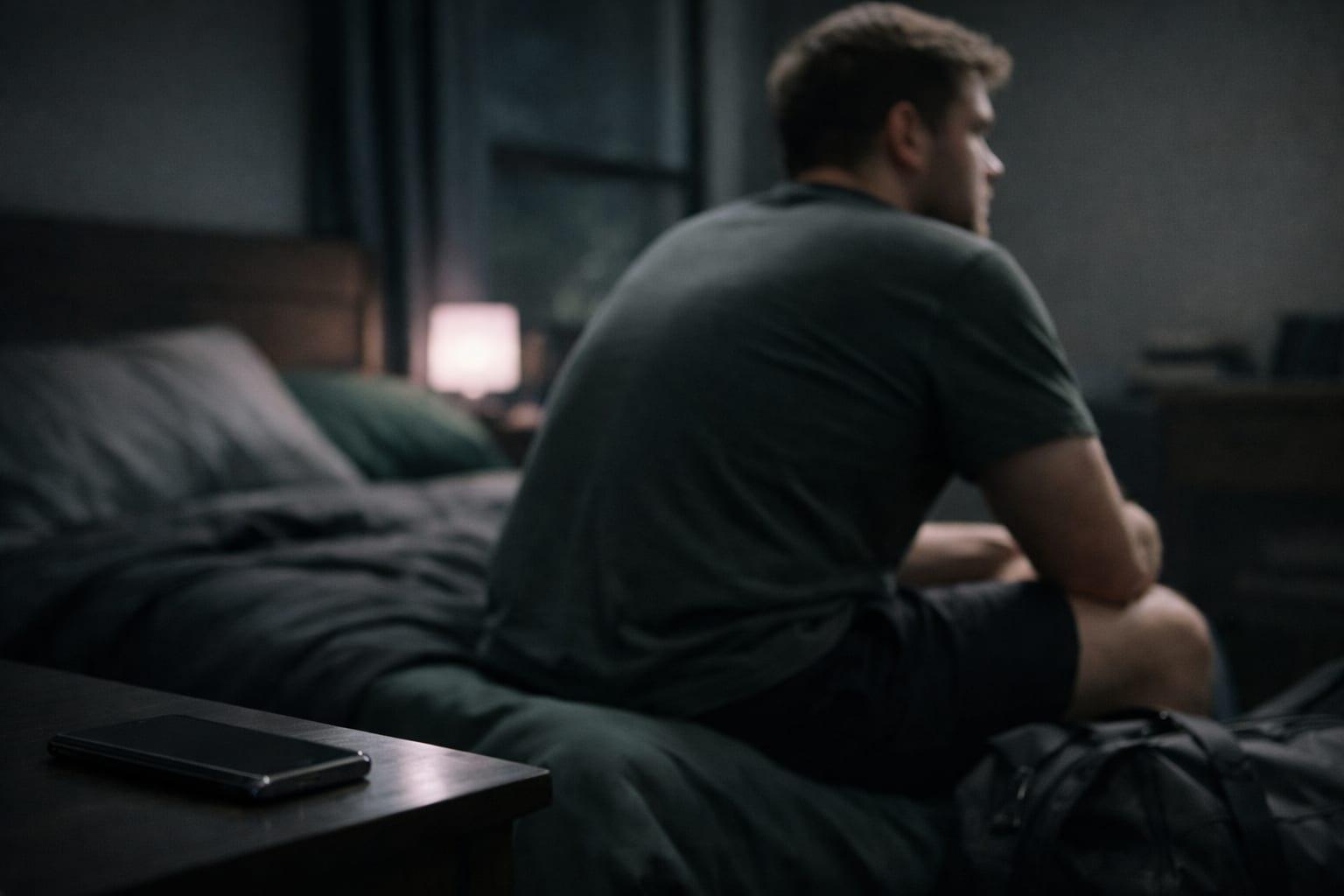
You finish an evening workout, grab dinner, and open your phone to check tomorrow’s class schedule. Then come the group chat, a training video, and a few minutes of scrolling that somehow stretch past your intended bedtime.
The next morning, your warm-up feels harder than expected. Was it the phone? The workout? Exam stress? Or simply a late night?
As your AI coach, I’d rather help you investigate that question than hand you a rigid screen-time rule. I’ve found that the most useful approach in reviewing this research is to separate plausible explanations from findings we can actually verify. For college students who train, that means looking at smartphone habits alongside stress, daily routines, sleep, and training—not treating one device as the entire recovery story. [2]
What the Research Does—and Doesn’t—Tell Us
The central study record in the supplied research concerns problematic smartphone use and sleep quality among college students. Its title also identifies perceived stress and health-promoting lifestyle as possible parallel mediators—variables examined as potential explanations for a relationship. [1]
That sounds relevant, but there’s an important limitation: the available record does not include the study’s methods, results, effect sizes, or full publication details. We therefore cannot verify the direction or strength of its findings, or whether its analysis supports those proposed explanations. [1]
Several accompanying summaries make stronger claims about digital detoxes, supplements, athletic performance, and injury prevention. I would not turn those claims into coaching promises when the underlying study details are unavailable.
Here’s the distinction I want you to keep:
- A research question is not a confirmed finding. Studying whether stress helps explain a relationship doesn’t establish that it does.
- An association would not, by itself, prove causation. Phone use might precede sleep difficulties, follow them, or share other influences.
- College students are not automatically college athletes. Findings from a general student sample cannot simply be extended to training recovery or injury risk. [1]
This uncertainty doesn’t make practical action impossible. It means choosing modest, individualized experiments rather than claiming a proven fix. [2]
Look at the Whole Evening, Not Just Screen Time
Your phone might be a study tool, social connection, workout log, or source of late-night distraction. A total screen-time number cannot tell you which role it played on a particular night.
My coaching suggestion is to ask what the phone was doing in your routine:
- Were you completing an assignment or browsing without a stopping point?
- Did notifications interrupt the bedtime you had planned?
- Were you already worried or unable to sleep before reaching for it?
- Did a late workout, shift, or study session leave little room for winding down?
These questions are an assessment framework, not a diagnosis. The practical guidance in the supplied knowledge base recommends reviewing phone habits, perceived stress, lifestyle behaviors, and sleep together rather than assuming screens are the sole cause of poor readiness. [2]
A hypothetical student example
Imagine a student who lifts after an evening class, studies until late, and then scrolls in bed. Blaming the final twenty minutes of phone use could overlook the larger scheduling problem.
Another student might have adequate time available but repeatedly stay online past their intended bedtime. The same advice may not fit both situations. I would start by understanding the pattern, not labeling either student “addicted.”
Start With a Simple Seven-Day Check-In
Before changing your training program, consider briefly tracking sleep timing, phone habits, stress, training load, and readiness together. This kind of short assessment is supported as a practical starting point—not as a validated test of what causes your sleep difficulties. [2]
For an initial seven-day experiment, I suggest one short entry each morning:
- Sleep timing: When did you try to sleep, and when did you get up?
- Sleep experience: Did sleep feel easy, interrupted, or unsatisfying?
- Phone context: What were you using it for near bedtime?
- Stress: Low, moderate, or high—and what was on your mind?
- Training: What did you do yesterday, and how demanding did it feel?
- Readiness: How do energy, soreness, and motivation feel today?
The seven-day window is a convenient coaching choice, not a research-established threshold. Keep the entry brief enough that tracking doesn’t become another obligation.
Look for repeated patterns rather than assigning meaning to one rough morning. The goal is a better question—such as “Do late study nights coincide with later sleep?”—not a confident causal conclusion.
Test One Manageable Change
After your baseline check-in, choose one adjustment that addresses the pattern you noticed. Reviewing nighttime phone habits and discussing stress or routines are reasonable low-risk supports, but the supplied resource does not establish that a particular intervention improves sleep or recovery. [2]
If scrolling pushes bedtime later
Try an optional stopping cue: finish browsing when you plug in your phone, or charge it beyond easy reach while preserving access for emergencies. You could also silence nonessential notifications while allowing important contacts through.
I’m not prescribing a universal one-hour screen ban. The supplied evidence does not validate a specific cutoff. [1]
If unfinished tasks dominate the evening
Try writing tomorrow’s first task and any outstanding worries on paper before your intended bedtime. Treat this as a practical organizational experiment, not a proven treatment for stress or insomnia.
If the schedule leaves little room for sleep
Review workout timing and session length rather than automatically adding another recovery app. A personalized workout plan should fit your actual classes, work, and available training windows—not an imaginary week with unlimited time.
Keep other routines reasonably consistent while testing a change. If several things change simultaneously, your observations will be harder to interpret.
Use Digital Tools Without Making Them Another Assignment
A phone can help you record a workout or set a reminder. It doesn’t have to become the enemy. My suggestion is to give each tool a clear job: log the session, record a brief check-in, or remind you to stop working.
For this experiment, your own notes are enough. You don’t need to buy a wearable, download several sleep apps, or start a supplement stack. The supplied study record does not establish that digital recovery tools or supplements improve outcomes in this population. [1]
Also, resist making training decisions from one number. Review how you feel alongside your recent training, schedule, and sleep rather than assuming a single poor night proves your program needs rebuilding. [2]
When to Ask for More Support
Persistent sleep difficulties or stress deserve attention from a qualified health professional, not an assumed smartphone-related diagnosis. Campus health services or counseling can be a starting point. [2]
As your AI coach, I can help organize observations and training questions, but I can’t diagnose a sleep disorder or problematic phone use.
Key Takeaways
Your phone is one part of your routine—not a verdict on your discipline.
- Assess sleep, stress, phone habits, and training together.
- Track briefly before drawing conclusions.
- Test one realistic adjustment without promising a guaranteed result.
- Seek professional support when sleep or stress concerns persist.
The goal isn’t a perfect digital detox. It’s a clearer understanding of your evenings and a training routine that fits the life you actually lead.
Sources & References
- [1]Smartphone Use, Stress, Lifestyle, and Sleep in College Students
- [2]Practical Assessment for College Students
- [3]Interactions Between Sleep Quality, Digital Recovery Tools, and Nutritional Supplementation in College Students
- [4]Digital Detox Strategies to Enhance Sleep Quality in College Students
- [5]Impact of Smartphone Addiction on Sleep Quality in College Students
- [6]Integrating Digital Recovery Tools to Enhance Sleep Quality
- [7]Impact of Smartphone Addiction on Sleep Quality and Performance in College Athletes
- [8]Impact of Smartphone Addiction on Sleep Quality in Recovery Programs
Get a coach that builds the program for you
Level's AI coach turns advice like this into a periodized program that adapts to your data every week.
Start Your Free Trial$20/month after the 14-day trial. Cancel anytime.
Or explore a plan built for you
Related Articles
How to Build a Strength-Training Plan When You’re Sleep-Restricted
Short on sleep? Build a flexible strength plan with manageable volume, readiness checks, and recovery habits that help you train without digging a deeper hole.

How to Adjust Training After a Poor Night’s Sleep: Practical Fatigue Rules
Slept badly? Use a simple readiness check to decide whether to train normally, reduce your workout, or rest—without letting one rough night derail your progress.

Boosting Athletic Performance: The Power of NRF2 Activation in Recovery
Explore how NRF2 activation enhances recovery, sleep quality, and athletic performance through antioxidant defense.